
Where Sapphire Can Replace Diamond
October 22, 2025
Benjamin Wu
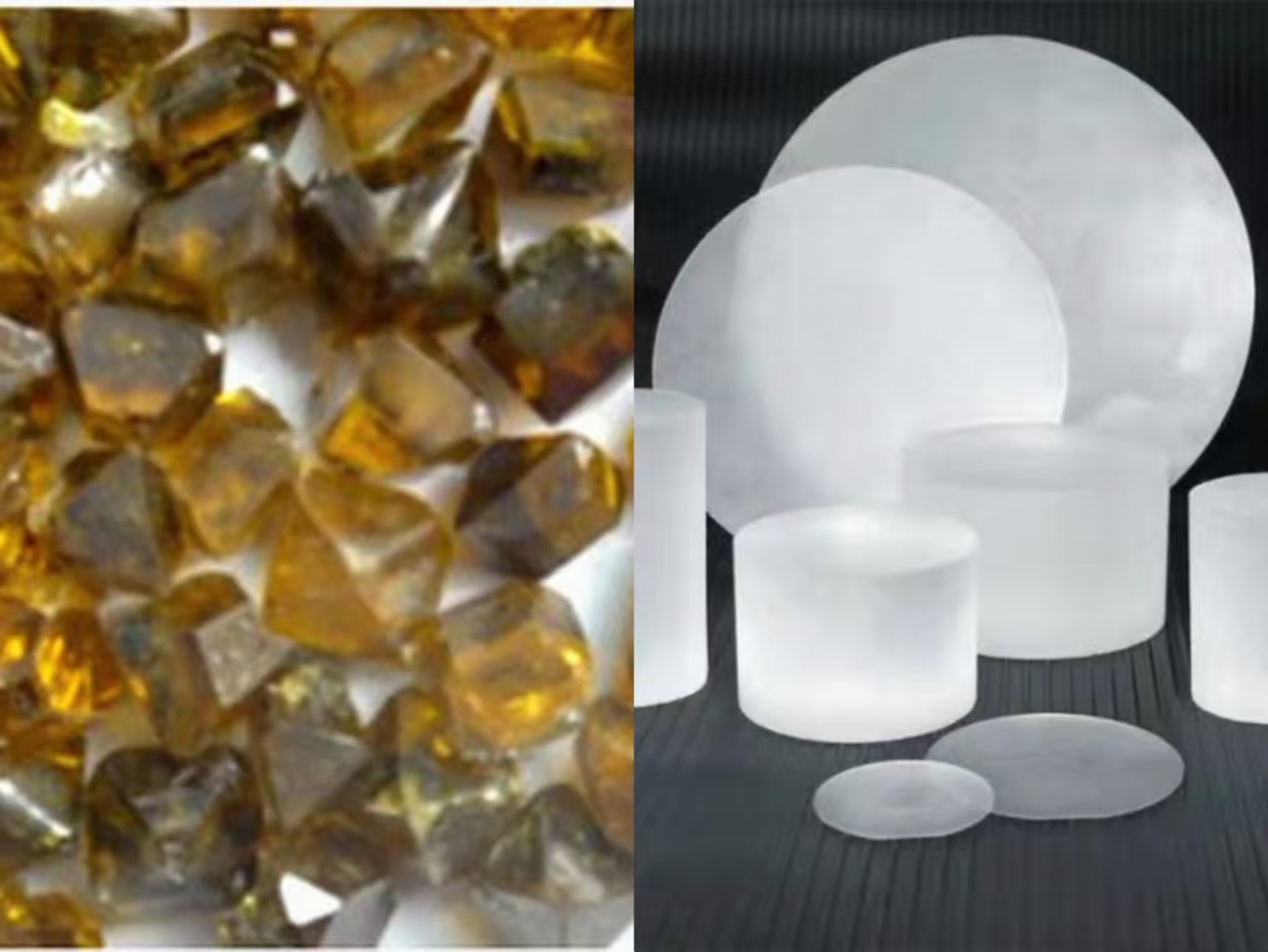
Applications of Synthetic Sapphire vs. Synthetic Diamond in Electronic Components
1. Primary Applications of Synthetic Sapphire (Al₂O₃)
(1) Optical Windows & Transparent Materials
- Infrared windows: Used in missile seekers, night vision devices, industrial thermal imaging (high transmittance in 3–5μm band).
- Laser windows: Protective lenses for low-power lasers (e.g., cosmetic lasers, rangefinders)—cost-effective alternative to diamond.
- Consumer electronics: iPhone camera covers, Apple Watch screens (Mohs hardness 9, more scratch-resistant than glass).
(2) LED & Semiconductor Substrates
- Blue LED substrates: >80% of global blue LEDs use sapphire (e.g., Nichia, CREE).
- Low-power semiconductors: MOSFETs, diodes (e.g., rectifiers, sensors)—limited in high-power applications due to low thermal conductivity (~35 W/mK).
(3) Industrial & Protective Components
- Scratch-resistant coatings: Alternative to Corning Gorilla Glass for smartphone screens.
- Corrosion-resistant parts: Wafer handling rings in semiconductor equipment (plasma-resistant).
2. Core Applications of Synthetic Diamond (C)
(1) High-Power Thermal Management
- AI/GPU chips: Diamond heat spreaders (e.g., NVIDIA H100 GPU)—reduce thermal resistance by >60%.
- Electric vehicles: Heat sinks for SiC power modules (thermal conductivity: 2000 W/mK, 5× copper).
(2) High-Frequency & Power Devices
- 5G RF components: GaN-on-Diamond boosts power density by 30%.
- High-energy lasers: Military laser weapon output windows (>2000°C tolerance).
(3) Ultra-Hard Processing Tools
- Wafer dicing: Diamond wire saws for silicon ingots (e.g., photovoltaic wafers).
- Precision polishing: Nanoscale polishing slurry for smartphone glass (diamond abrasives).
3. Three Key Scenarios Where Sapphire Replaces Diamond
| Scenario | Reason for Substitution | Examples |
|---|---|---|
| Optical windows | Sapphire’s transmittance (80–90%) nears diamond’s at 1/10th the cost | Civilian lasers, industrial IR sensors |
| Low-end substrates | Adequate for low-power LEDs (lattice matching, low cost) | General blue LEDs (e.g., TV backlights) |
| Consumer coatings | Mohs hardness 9 (vs. diamond’s 10) suffices for daily wear | iPhone lenses, smartwatch displays |
4. Irreplaceable Uses of Diamond
- Thermal management: Diamond’s conductivity (2000 W/mK) is 50× sapphire’s—critical for high-power chips.
- Extreme environments: Aerospace cooling, deep-well sensors (high temperature/pressure resistance).
- High-frequency devices: 5G base station RF modules (ultra-low dielectric loss).
Comparative Summary
| Property | Synthetic Sapphire | Synthetic Diamond |
|---|---|---|
| Thermal conductivity | 25–40 W/mK | 1000–2000 W/mK |
| Hardness | Mohs 9 | Mohs 10 |
| Transmittance range | 0.15–5.5μm | 0.2–2.5μm (weaker in far-IR) |
| Typical cost | \$10–100/2-inch wafer | \$500–5000/2-inch wafer |
Conclusion:
- Use sapphire: Cost-sensitive applications (optics, low-power).
- Diamond-only: High-power, high-frequency, extreme conditions (performance-critical).